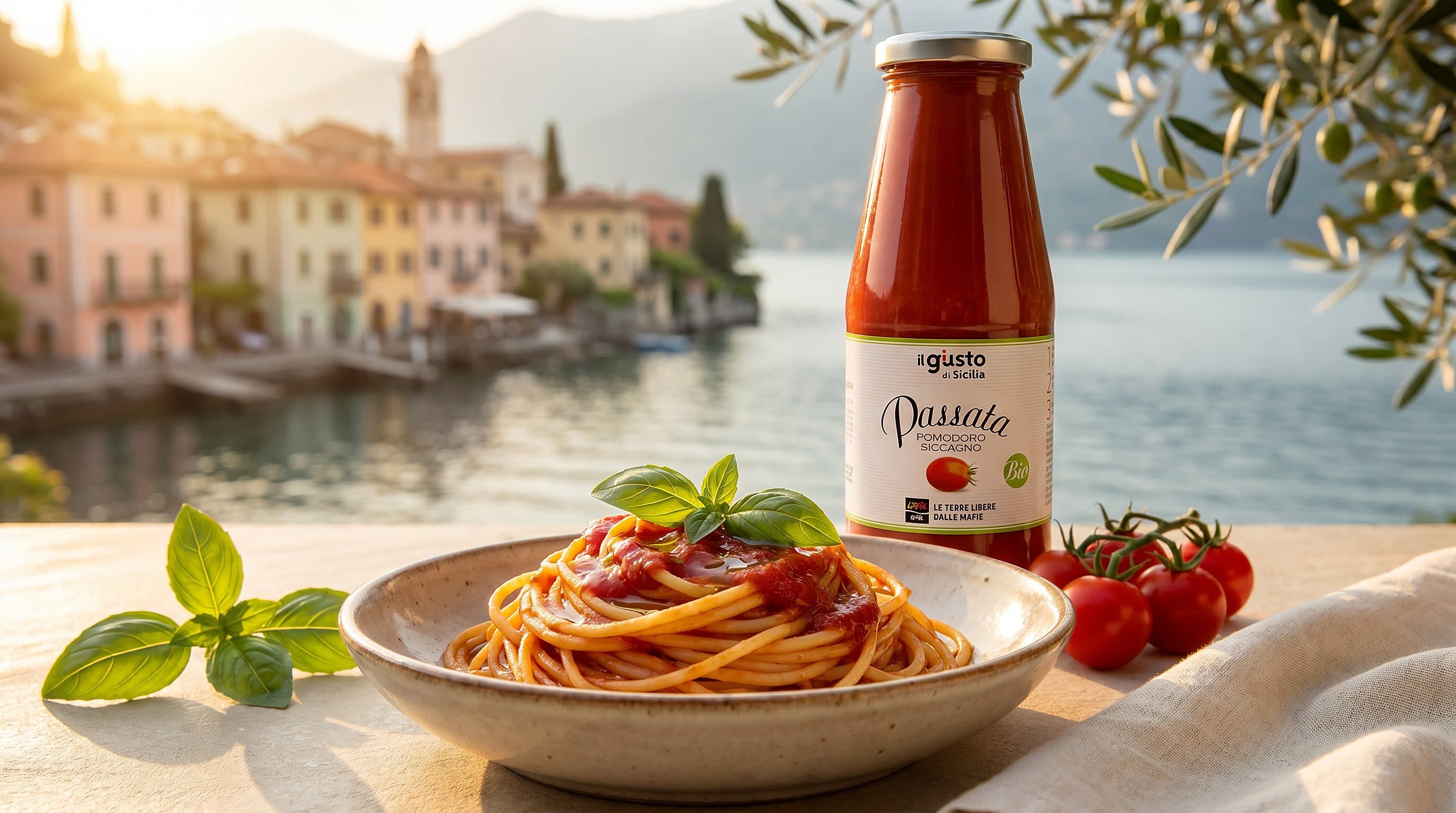
Pastaal pesto trapanese.
Almonds, tomato and basil: a Sicilian pesto.
20 min4 servings
Prep 10 min · Cook 10 min
Tested in Teresa's kitchen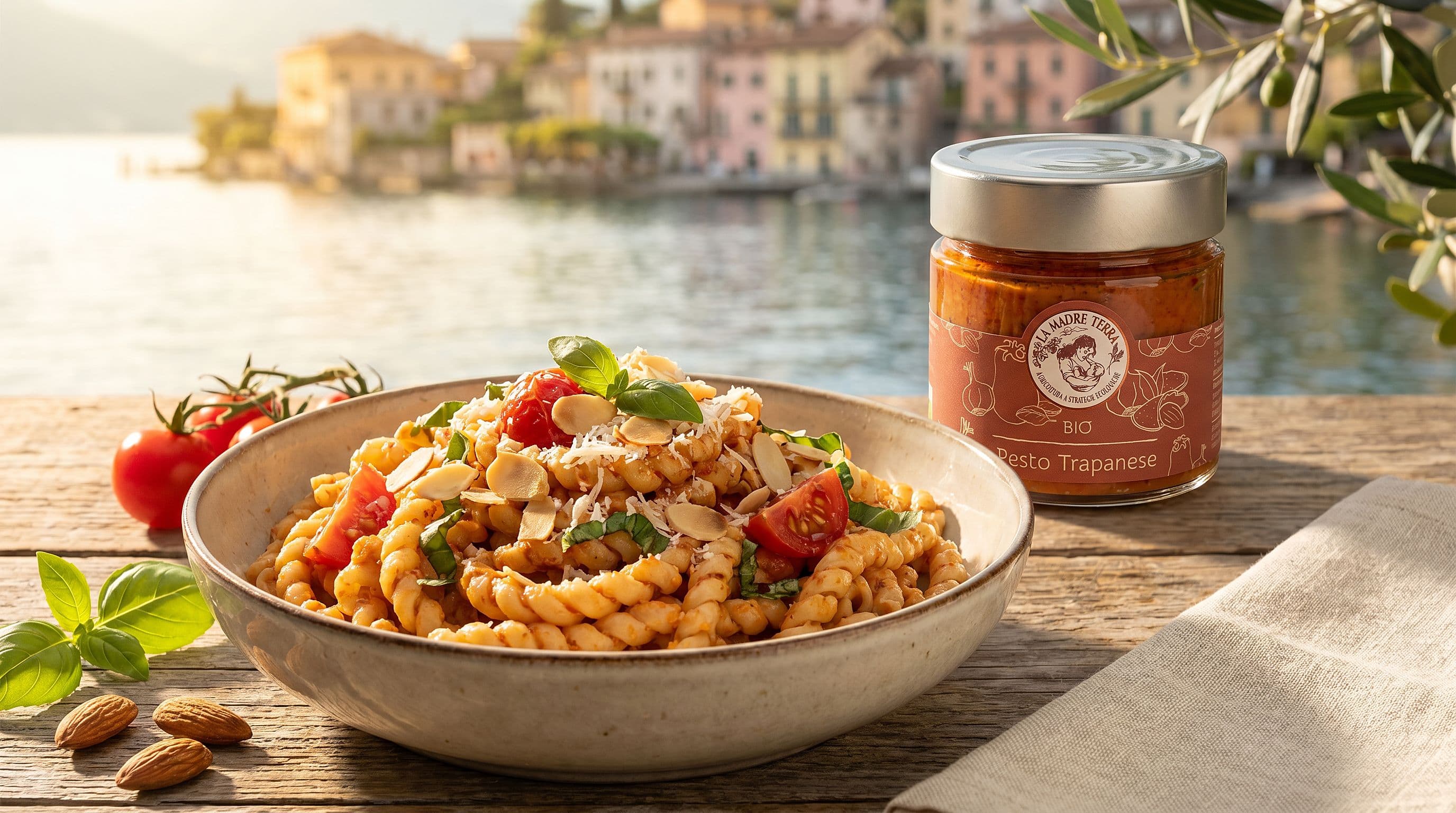
Ingredients
For 4 servings
- 400 g spaghetti
- 200 g ripe, fragrant tomatoesSkinned and seeded
- 80 g blanched almondsPlus a handful to finish
- 1 large bunch of fresh basil
- 1 clove garlic
- 50 g grated pecorinoPlus a little to serve
- 6 tbsp extra virgin olive oilPlus a drizzle to serve
- Salt
Method
6 steps, simply.
Cook the spaghetti
Bring a large pot of water to the boil and salt generously. Cook the spaghetti al dente per the packet time.
Toast the almonds
Meanwhile, toast the almonds dry in a pan over medium heat for 2-3 minutes, until fragrant. Set a handful aside to finish.
Pound the pesto
In a mortar or blender, pound the garlic with a pinch of salt, add the toasted almonds and basil, then the skinned tomatoes. Work to a coarse paste, without smoothing it completely.
Stir in pecorino and oil
Stir in the pecorino and the olive oil in a stream until you have a supple, glossy pesto. Taste and adjust the salt. Don't heat it: trapanese is made raw.
Toss the pasta raw
Before draining, reserve a ladle of pasta water. Tip the drained pasta into a large bowl (off the heat), add the pesto and a little pasta water, and toss vigorously for 1 minute to coat every piece.
Garnish and serve
Serve at once with the chopped toasted almonds, a few basil leaves, a little pecorino and a final drizzle of raw olive oil.
The small details that make the difference.
A few pointers before you start.
Pesto trapanese or pesto genovese?
They're two different pestos, from the two ends of Italy. Genovese is Ligurian: basil, pine nuts, parmesan, green. Trapanese is Sicilian: almonds, ripe tomatoes, basil, pecorino — red-pink, and rounder thanks to the almond. If you're after "red pesto" or "Sicilian pesto", this is the one. Our Madre Terra Pesto Trapanese is the Sicilian version, in a jar.
Which pasta for trapanese?
In Trapani it's traditionally served with busiate, the coiled pasta that wraps the sauce in its spirals. Here it's bronze-cut Libera Terra spaghetti: their rough surface holds the pesto, where a smooth pasta lets it slide off.
Jar or homemade?
Both are real. The raw, mortar-pounded recipe for the pleasure of the gesture on a night you have time and good tomatoes; the Madre Terra Pesto Trapanese for busy nights — same almonds, same tomato, ready in the time the pasta cooks. Either way, don't heat it.
Good things, to start with.
Pesto has a Sicilian cousin, and it's red. In Trapani, at the far end of the island, you don't pound pine nuts and basil alone: you crush ripe tomatoes, blanched almonds, basil, garlic, pecorino and olive oil — raw, in a mortar. It's the sun and the almond in place of pine nuts, the tomato in place of the Ligurian green. Nothing cooks but the pasta: pound, toss, serve. The result is dense, fragrant, just tart from the tomato, rounded by the almond.
For busy nights we put it in a jar without betraying it: our Madre Terra Pesto Trapanese keeps the real almond and real tomato for a true trapanese in ten minutes, the time it takes to cook the bronze-cut Libera Terra spaghetti. These organic pastas are born in Sicily itself, on estates that cooperatives wrested from the mafias to return to cultivation; their rough surface holds the pesto like no smooth pasta can. And because it's a raw pesto, we finish it with chopped toasted almonds, basil, a little pecorino and a drizzle of raw olive oil. A useful note: this isn't the green pesto genovese — it's Sicily's pesto rosso, another story in the same word. Below, both routes: the raw recipe, and the jar shortcut.
La Lettre
The panettoni's arrival, and one recipe a month.
Related recipes
All the recipes
Gourmethica · Pasta al pesto trapanese · gourmethica.ch/en/recettes/pasta-al-pesto-trapanese